Questions to Ask Contractors About Maximizing Historic Home ROI
Asking the right questions helps owners select contractors who will maximize ROI. provides a checklist of essential questions to evaluate contractor capability. Call to receive the contractor questionnaire. We make sure contractors align with preservation goals and budget targets.
Choosing a contractor for a historic property is not the same as hiring someone for a modern remodel. Historic homes require sensitivity to original materials, an understanding of period construction techniques, and a clear focus on long-term value. That's why owners should prepare a list of targeted questions to ask contractors about maximizing historic home ROI before any bids are accepted. helps you refine those questions and provides a tried-and-true questionnaire that homeowners can use to compare contractors on equal footing.
Why asking focused questions improves ROI
When you ask thoughtful, specific questions you are not only screening for competence-you are also shaping the contractor's approach to value. Contractors who can explain trade-offs between upfront expense and long-term preservation outcomes are more likely to deliver a result that increases market value and minimizes future repair costs. This clarity matters especially in historic homes, where inappropriate materials or short-term fixes can erode authenticity and reduce a property's appeal to buyers and preservation-minded lenders.
Beyond technique, your questions reveal whether a contractor understands how to manage budget, schedule, and risk in a way that protects your investment. Contractors who prepare contingency plans, offer staged work to reduce disruption, and propose materials that both match original character and meet code are demonstrating a mindset geared toward maximizing ROI. It's these practical and strategic responses you want captured in writing before work begins.
Essential checklist: questions to ask contractors about maximizing historic home ROI
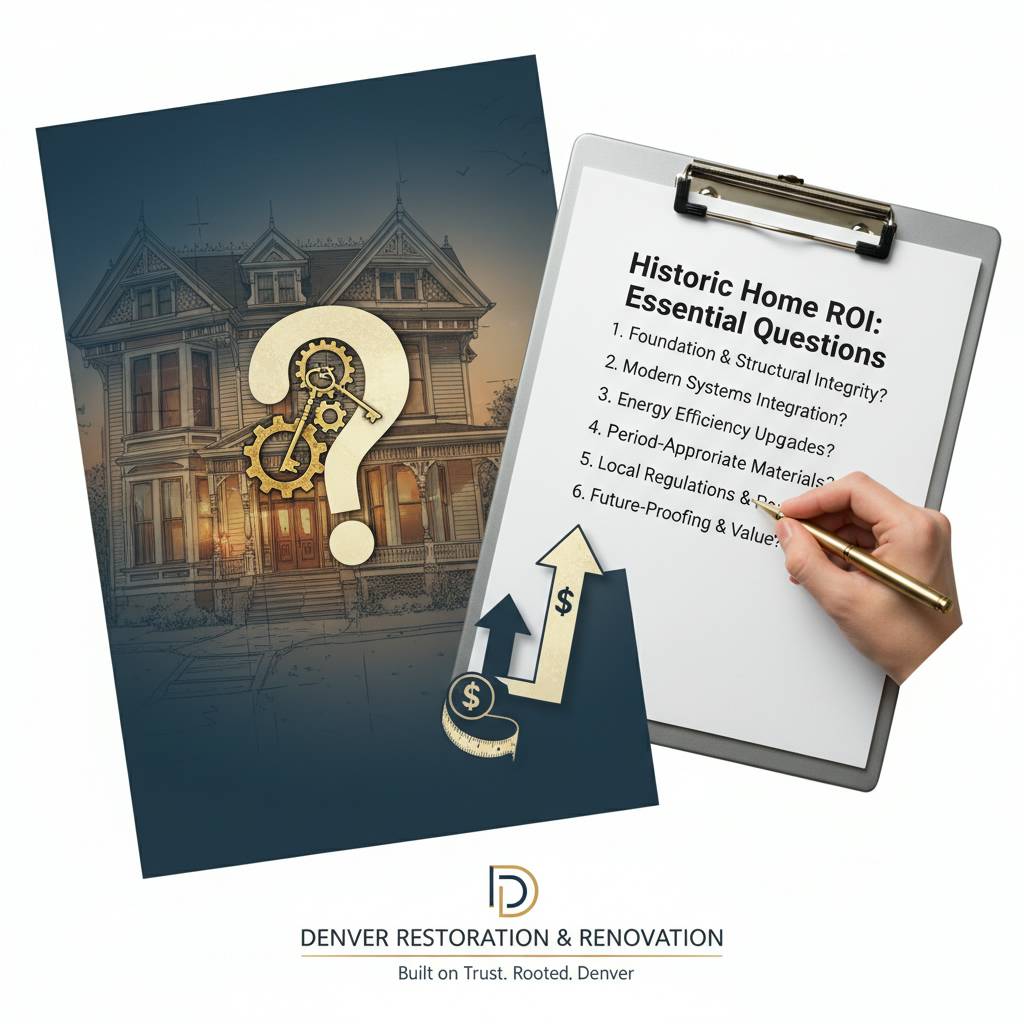 The following checklist covers the core areas that separate capable historic-preservation contractors from general remodelers. Use these questions when you interview candidates, and request written responses or documentation where relevant. If a contractor struggles to answer or refuses to provide references and permits, treat that as a warning sign and move on.
- What experience do you have with buildings from this era and of this construction type? Ask for specific projects and documentation.
- Can you provide references, photos, and contact information for similar preservation or restoration projects? Confirm results and timelines.
- Which materials and methods will you recommend to balance authenticity and durability? Ask for alternatives with pros and cons.
- How do you propose protecting original features during construction? Request a written protection plan for finishes and architectural elements.
- What is your approach to uncovering and addressing concealed defects that could affect cost and schedule? Ask about contingency allowances.
- How do you handle code upgrades, accessibility and energy-efficiency improvements while maintaining historic character?
- What warranties, guarantees, and post-completion support do you offer on both workmanship and installed materials?
- How do you manage subcontractors and specialists (e.g., historic-masonry, millwork, lead/asbestos abatement)? Request names and credentials.
- Can you provide a phased schedule and budget that prioritizes preservation goals while allowing flexibility for discoveries?
- Are you familiar with local historic district rules, tax incentives, and available grant programs that could offset costs?
Assessing technical capability and preservation sensitivity
Technical competence goes beyond a contractor's ability to swing a hammer. For historic homes, it includes an appreciation for original joinery, masonry, plaster systems, and finishes. Ask contractors to describe how they would replicate or repair specific elements-like tongue-and-groove floors, lime-based mortar, or historic windows-and listen for references to compatible materials rather than modern substitutes that can trap moisture or create aesthetic mismatch.
Materials, techniques, and documentation
Request a clear explanation of proposed materials and techniques and ask the contractor to document why each choice supports preservation goals. For example, repairing original windows rather than replacing them can maintain historic fabric and increase long-term value; when replacements are necessary, insist on profiles, sightlines, and finishes that match originals. Written justification demonstrates that the contractor is thinking about longevity and resale appeal, not just convenience.
Experience with historic-specific trades
Different trades are often required on historic projects-specialist masons, plaster restorers, and millworkers, among others. Ask which specialists the contractor routinely uses and request proof of past collaboration. Contractors who maintain a network of trusted preservation tradespeople typically produce better outcomes and can often expedite approvals by demonstrating prior success with similar work.
Cost, timelines, and managing uncertainties
 Cost estimates for historic projects should reflect uncertainty and provide transparent allowances for discoveries. Ask for a line-item budget that separates known scope from contingency items, and request the contractor's policy on change orders. Contractors who proactively identify potential unknowns-such as hidden rot, inadequate framing, or hazardous materials-and include contingency strategies are more likely to keep you on budget and protect your ROI.
Similarly, timelines must be realistic and include allowances for inspections, permit processing, and specialized trade scheduling. Historic preservation often requires approvals from local review boards or commissions; ask the contractor about prior experience securing such approvals and whether they will handle submissions, revisions, and site representation for hearings.
| Project type | Typical cost range | Notes |
|---|---|---|
| Exterior wood window repair | $200-$1,200 per window | Depends on extent of rot, sash weight, and hardware restoration. |
| Masonry repointing | $10-$60 per sq ft | Lime mortar vs cement mortar affects cost and compatibility. |
| Roof repair or replacement (historic materials) | $5,000-$45,000 | Range varies with material-slate is higher, asphalt or composite is lower but may not be appropriate. |
| Interior plaster restoration | $75-$200 per hour | Specialist labor rates reflect skill and restoration techniques required. |
Contracts, warranties, and scope control
 A strong contract is one of the best protections for your investment. Ask for a detailed written contract that includes scope, specifications, payment schedule, schedule milestones, contingency allowances, and dispute resolution terms. Ensure the contract requires the contractor to obtain and pay for required permits, inspections, and code compliance documentation. Clarity here reduces surprises and helps maintain ROI by preventing scope creep and uncontrolled invoice increases.
Warranties are also critical. Ask what the contractor will guarantee and for how long-both for workmanship and for materials-and whether those warranties are transferable. Written warranties provide reassurance to future buyers and can protect resale value. If a contractor offers unusually short or no warranty coverage, that should be considered a significant red flag.
Red flags to watch for during contractor interviews
 Some warning signs are immediate: reluctance to provide references, no proof of insurance, evasive answers about materials or methods, and quotes that are significantly lower than competing bids without a reasonable explanation. These can indicate a contractor who will cut corners, use incompatible materials, or fail to complete the work properly-outcomes that reduce both preservation integrity and ROI.
Other red flags are subtler: a contractor who insists on replacing rather than repairing without justification, someone who refuses to document protections for original finishes, or a bidder who lacks experience navigating local historic commission requirements. Use follow-up questions to dig into these areas, and when in doubt, ask for advice or a second opinion on contractor responses.
Questions that protect value during project execution
 Even after you hire a contractor, continue to ask strategic questions that protect your investment. Regular site updates, written change orders, documented material approvals, and staged inspections are all practical mechanisms for maintaining control. Ask how the contractor will communicate progress-daily logs, weekly meetings, or photo updates-and require that any changes to scope or budget be documented and signed before work begins.
- Who is the day-to-day contact, and how will decisions be escalated?
- How will unforeseen discoveries be documented and priced?
- What measures will be taken to protect landscaping, period details, and interior finishes?
- How will specialized trades be scheduled to avoid rework and delays?
How helps you evaluate contractors
provides a concise, actionable contractor questionnaire that you can use to solicit consistent answers from prospective contractors and compare them objectively. The questionnaire is designed to reveal not only experience and cost, but also how contractors plan to protect historic fabric, manage risk, and add long-term value. Many homeowners find that having standardized answers simplifies negotiations and accelerates decision-making.
If you want a deeper review, and our team can vet contractor responses, review proposed budgets and schedules, and offer recommendations to align work with preservation goals and budget targets. We emphasize practical ROI-enhancing choices: targeted repairs that preserve original materials, energy upgrades that do not compromise character, and prioritized work that brings the highest near-term and long-term value to the property.
Case example: prioritizing ROI on a Victorian renovation
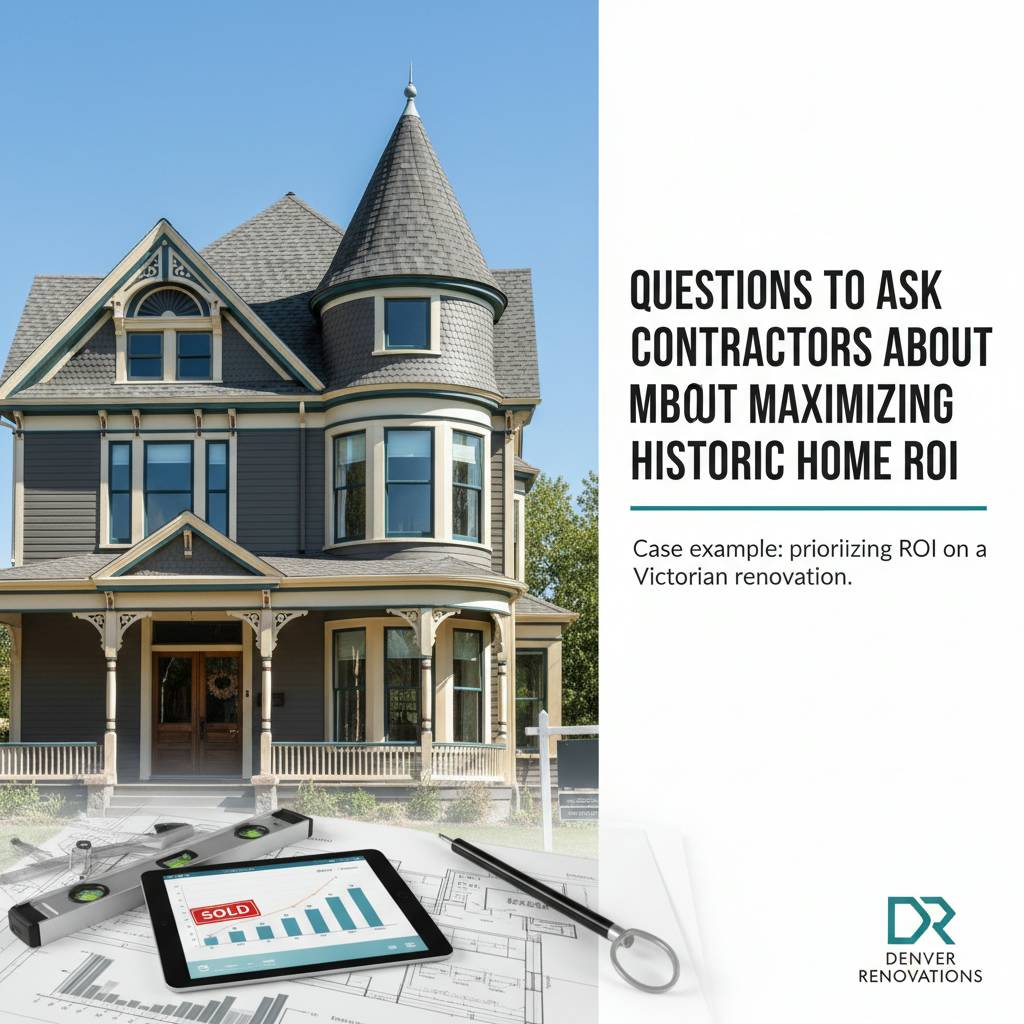 A recent homeowner engaged three contractors for bids on a Victorian restoration. One contractor proposed wholesale window replacement, another recommended staged window repair with selective replacement where necessary, and the third offered a general replacement with modern materials. The owner used a focused set of questions from to evaluate long-term costs and resale appeal. The staged repair approach proved to offer the best balance of authenticity, immediate cost control, and long-term value, and it preserved character that buyers later cited as a top selling point.
That outcome illustrates the practical value of asking the right questions: informed choices often yield better preservation results and higher buyer interest, which translates directly into improved ROI when it's time to sell or refinance.
Next steps and how to get the questionnaire
If you're preparing to interview contractors for a historic property, request the contractor questionnaire from . The checklist we provide is concise, field-tested, and tailored to surface the answers that matter most when maximizing historic home ROI. Having consistent, written responses makes it straightforward to compare contractors and negotiate terms that protect both value and character.

To receive the questionnaire or to schedule a consultation, call us at . Our team will walk you through key items to highlight in bids and can help you interpret contractor responses so you can make the best decision for your property and budget.
Take action now: A short, focused conversation with can help you avoid expensive mistakes and choose a contractor who treats your historic home with the care it deserves. Call to get started.